Author: svegow_wp2

  • Nature? We Don’t Need No Stinkin’ Nature When There’s Money to Be Made

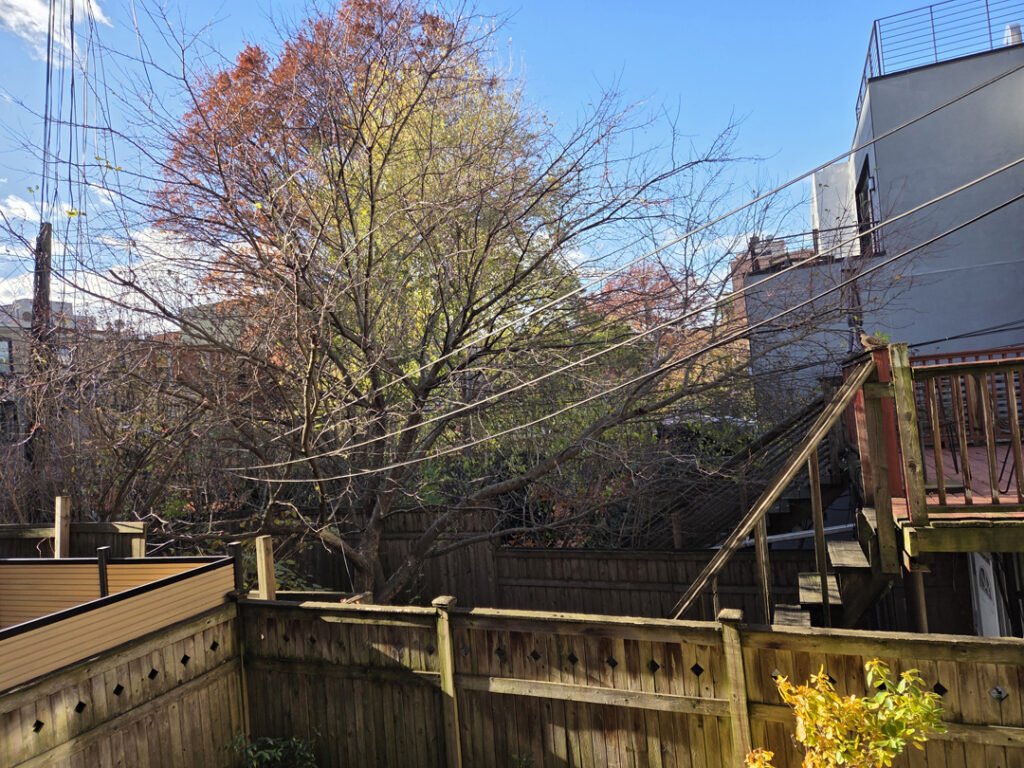
    the greenspace created by our back yards
    Some of the greenspace created by the individual back yards of our houses.

    WHY DO WE HAVE BACKYARDS?

    Housing designers in 19th century New York City planned houses with backyards that would make a communal greenspace as a reaction to the overcrowding, disease, and pollution of the slums created by the Industrial Revolution. Such open-center blocks maximized sunlight and ventilation to prevent the spread of disease; they were also thought to make urban living less stressful.

    Although the original designers did not have to worry about climate change, the backyards also help to lower the temperature of the neighborhood and absorb excess rainwater. In a sea of concrete and asphalt, these back yards also provide a haven for wildlife like birds, butterflies, squirrels, and the disappearing bees. Real-estate developers don’t care.

    WHAT WILL DIE FOR ANOTHER LUXURY BUILDING?

    Here is just some of the nature that will die so that the rich can enjoy their roof terraces in the sky and in-house wine bars in the planned 85-unit luxury apartment building called the 416 4th Avenue Project. T

    First up is the neighborhood tree, a decades-old apple tree that provides pollen for bees, space for wildlife, and food for the same critters; it will be the first to die because it is in the way of the proposed building.

    A decades-old apple tree in bloom.
    Our decades-old apple tree that will be cut down for the 85-unit luxury housing development.

    Rose of Sharon trees, like these in bloom, grow in many yards, but they will also be ripped out for profit.

    A Rose of Sharon shrub.
    Rose of Sharon shrub that feeds more bees will be removed for a massive building in the greenspace.

    The plants in this garden on 4th Avenue will slowly die from lack of sunlight as the massive luxury apartment building throws neighboring backyards into permanent shade.

    Small space, but full of plants to feed bees and butterflies, cool the air, and absorb rainfall
    A blooming forsythia bush

    Forsythia to brighten the early Spring

    Pink flowers on a bleeding heart plant

    Bleeding heart in bloom sprinkled with petals from the neighboring apple tree

    Rhododendron shrub with yellow blossoms.
    Rhododendron in bloom with hellebores beneath the pot.
    An azalea bush in glorious bloom.
    An azalea bush in full bloom

    All these plants will die- either cut down or dying slowly from lack of sunlight, but not to worry because tech bros paying $10,000/month and more in rent can have barbeques on the roof without ever encountering their neighbors or the wildlife that previouslycalled the greenspace home.

    MORE FLOODING?

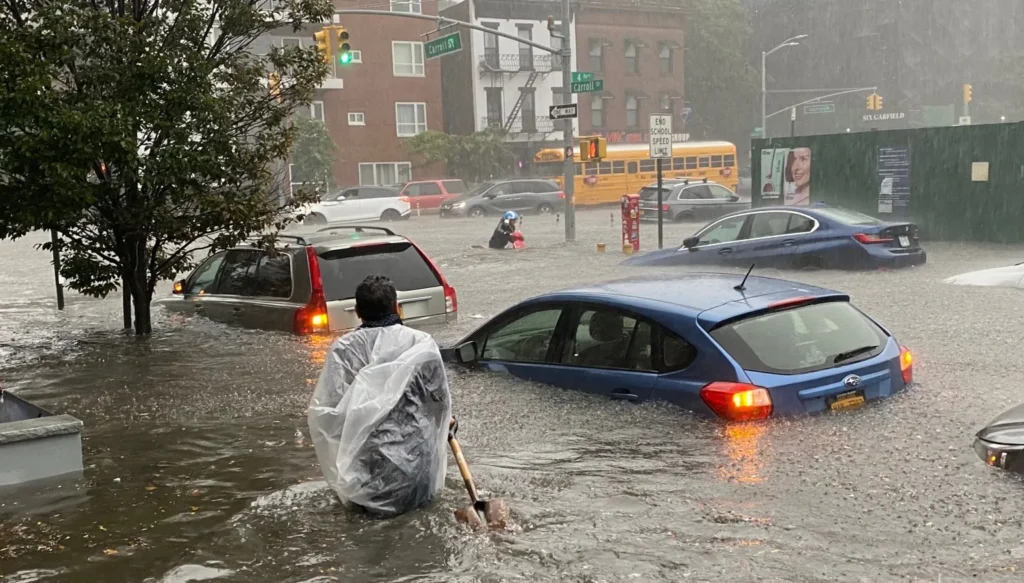
    Located in the rainwater flood zone, the greenspace in our block also helps to absorb excess water during rainstorms, preventing nearby floods like the one pictured below; this is a necessary function since the city never built a large-enough sewer system to handle the structures that are already here.

    Flooding on 4th Avenue in 2023
    An example of the flooding on 4th Avenue and Carroll Street from September 2023. Photo by Joann Amitrano.

    WHERE ARE OUR ELECTED REPRESENTATVIES?

    At the same time that the City Council is allowing unfettered construction of luxury housing on 4th Avenue that will replace needed nature on our block, New York City officials say they are desperately trying to create more green space.

    Brooklyn Community Board 6, Council Member Hanif, Mayor Mamdani, please make this make sense. The excuse that “this is legal” doesn’t cut it.

  • How Housing for the Rich is Destroying Gowanus, Part 1

    New York city needs more housing, but the promises of affordable housing by our politicians bear little resemblance to the actual destruction of the Gowanus Canal neighborhood for more massive, luxury, high-rise apartment buildings for the rich. Maybe explaining why this neighborhood is special and how developers are destroying historic houses offering affordable rent for more housing for the rich (who don’t want to live on a 6-lane highway) will help save another neighborhood. First a few posts on what makes Gowanus special and why unfettered development is not a good idea.

    If you haven’t seen our quick description of what we are fighting, visit our website at https://www.savegowanusliving.org/

    THE EARLY DAYS OF OUR NEIGHBORHOOD

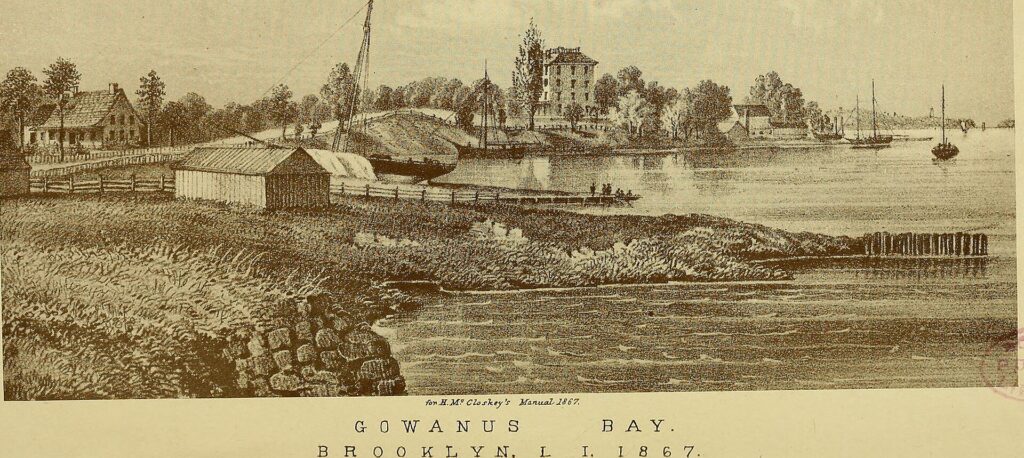
    The Gowanus area was originally a series of tidal creeks winding through a saltwater marsh; the land was so wet that some of George Washington’s troops drowned while retreating in the rain during the Battle of Brooklyn in 1776.

    The Gowanus Bay
    The Gowanus Bay in 1867. Photo from Wikipedia.

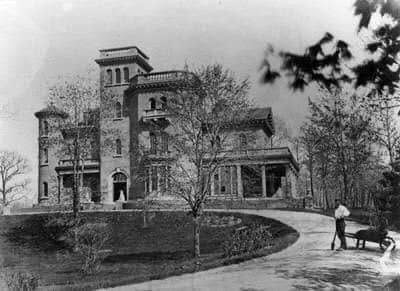
    The area was later drained to make farmland and provide ponds for local mills; additionally, the Gowanus Creek turned out to be so useful for travel that it was enlarged in the 1860s to create a major canal for businesses and manufacturers. At the same time, Edwin Litchfield, prominent Brooklyn lawyer and businessman, turned farmland into streets and lots for houses and businesses that were located mere blocks from his villa in what is now Prospect Park. Our block on 4th Avenue between 7th and 8 Streets was part of that plan for development of an area that stretched from about 1st Street to 9th Street.

    The Litchfield Villa completed in 1857 in what is now Prospect Park.
    Edwin Litchfield’s villa completed in 1857 in what is now Prospect Park. He could see “his” Gowanus Canal from the cupola.

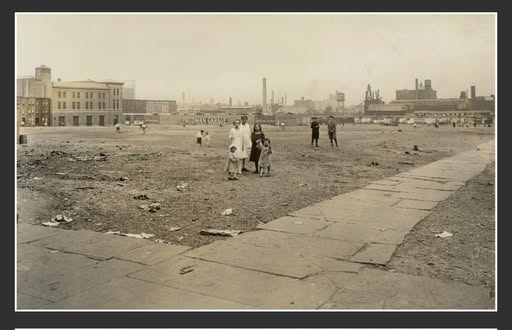
    Litchfield raised the level of the land near the Old Stone House to create these plots and streets that became 4th and 5th Avenues by covering it with 12-16 feet of dirt that was dredged from making the Canal larger and deeper. Even the remains of the original Vecht house (now the Old Stone House), built before 1704 and scene of an important part of the Battle of Brooklyn, was eventually buried under all that fill dirt. For photos of raised streets around the Old Stone House, take a look at this engineers’ report starting on page 11: https://s-media.nyc.gov/agencies/lpc/arch_reports/2042.pdf. The Old Stone House remained buried until a commemorative plaza was planned in 1926, but the remains of the structure weren’t found until 1933.

    The empty lot with the remains ofthe Old Stone House buried under 12 feet of dirt.
    An empty lot in 1922. Actually, the remains of the Old Stone House are there, buried under 12-16 feet of dirt.
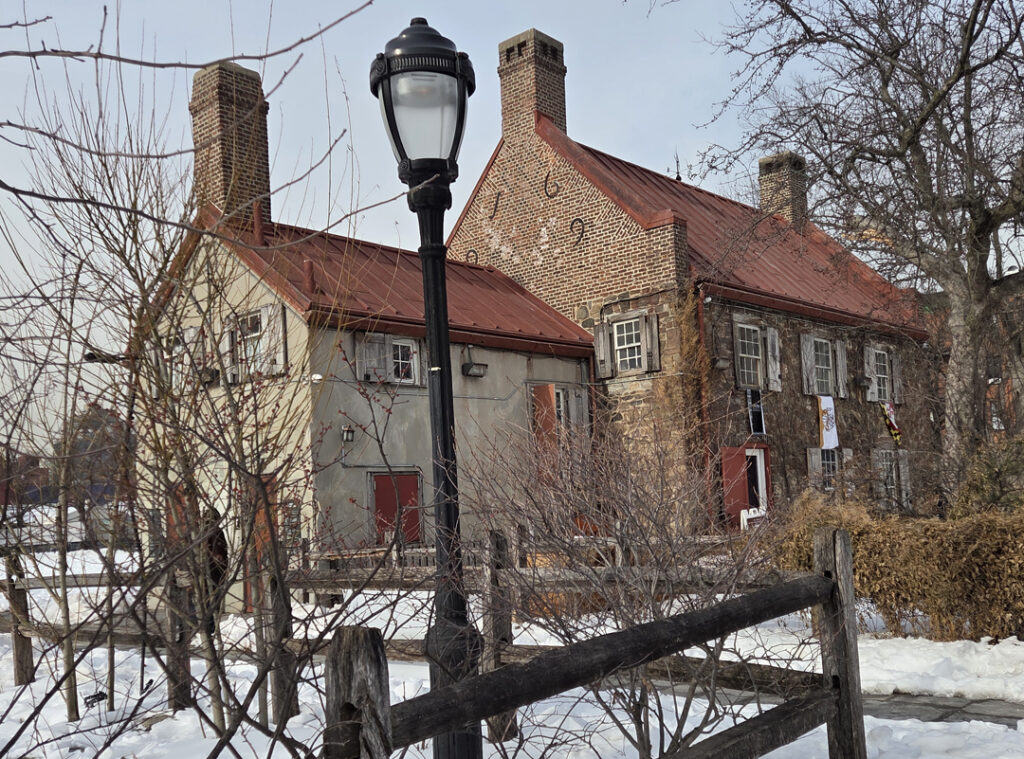
    The 1933 recreation of the Vechte-Cortelyou house.
    The Vechte-Cortelyou house, now called the Old Stone House, in its current form after being rebuilt in the 1930s.

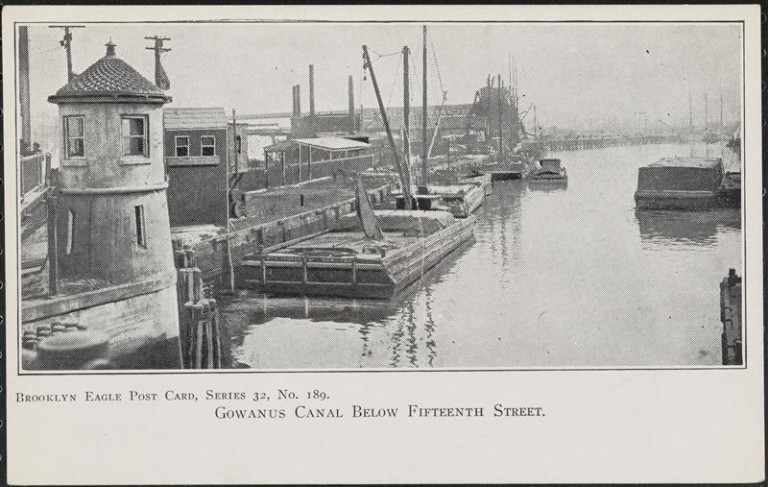
    With the wider and deeper Gowanus Canal making transport easier, businesses such as gas plants, chemical plants, coal yards, cement works, lumber yards. tanneries, ink manufacturers, and milk bottlers sprang up around the Gowanus Canal and surrounding area. By the early 1900s, the Canal was the busiest industrial canal in the United States, transporting more than 6 million tons of cargo per year.

    The Gowanus Canal in 1910.
    The busy Gowanus Canal in 1910. Photo courtesy of the Museum of the City of New York.

    Not all of the industry was confined to the shore of the Gowanus Canal, some of it was situated in our neighborhood between 4th and 5th Avenues.

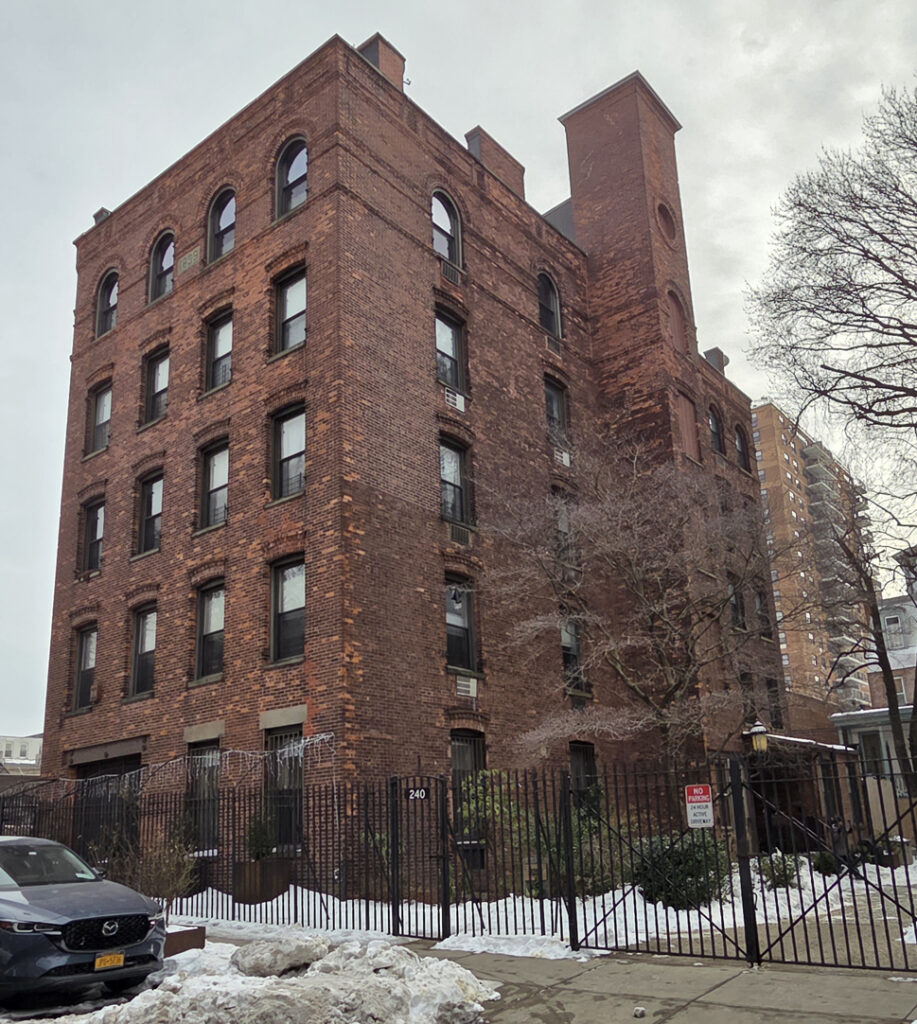
    The former Higgins Ink Factory
    The Charles M. Higgins Ink factory, now residences at 244 8th Street, Gowanus

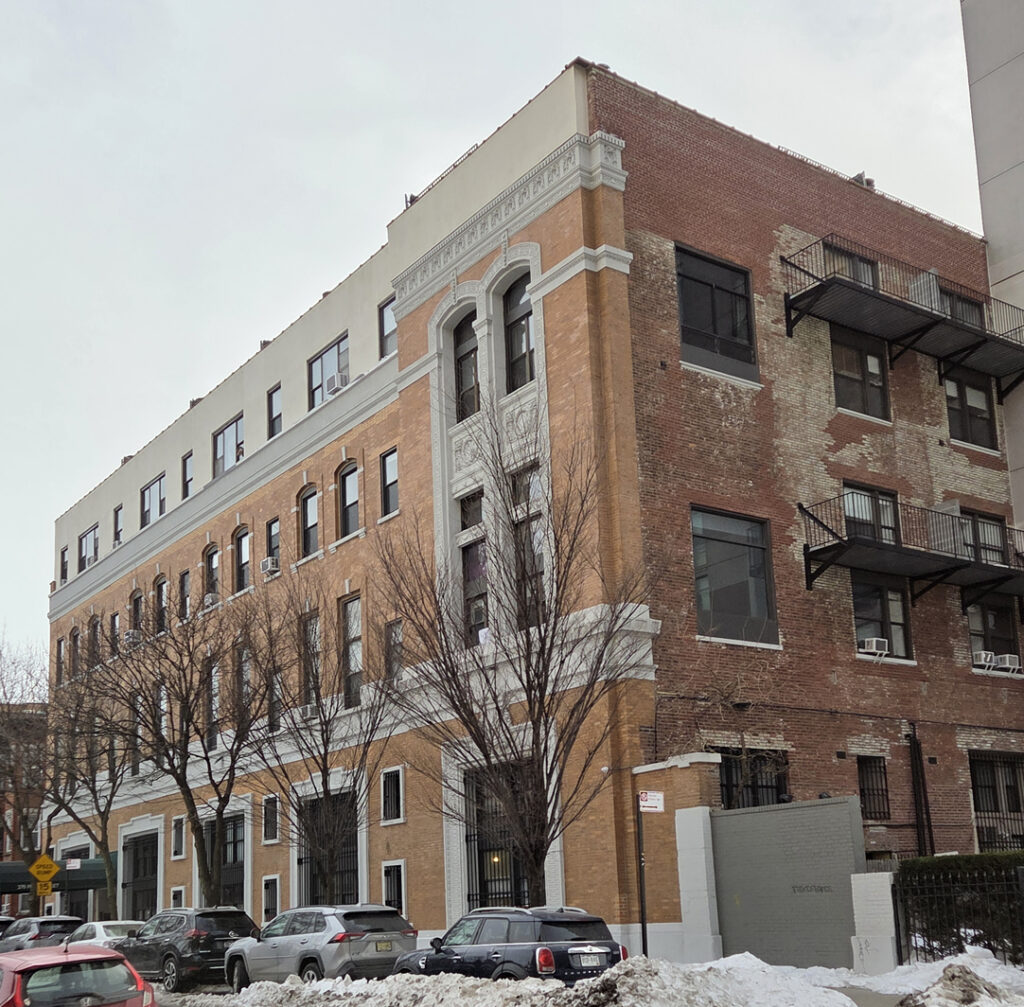
    The former Borden Milk Factory, complete with cows, is now residences at 270 5th Street, Gowanus.
    The former Borden Milk Factory, complete with cows, is now residences at 270 5th Street, Gowanus.

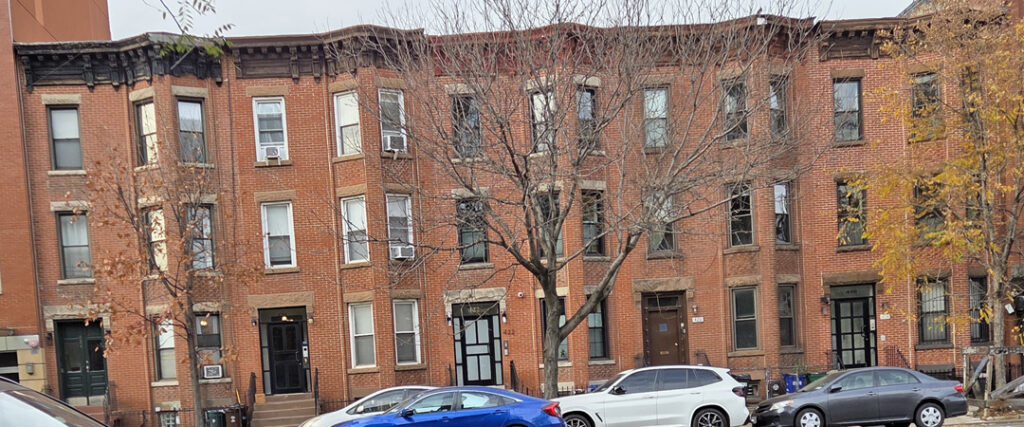
    As businesses thrived, 2-and-3-family houses for the middle class were built on our block of 4th Avenue, 7th Street, and 8th Street. Houses on 4th Avenue alternated with commercial buildings or vacant lots; the 2 larger buildings at the ends of our block were built about 1930.

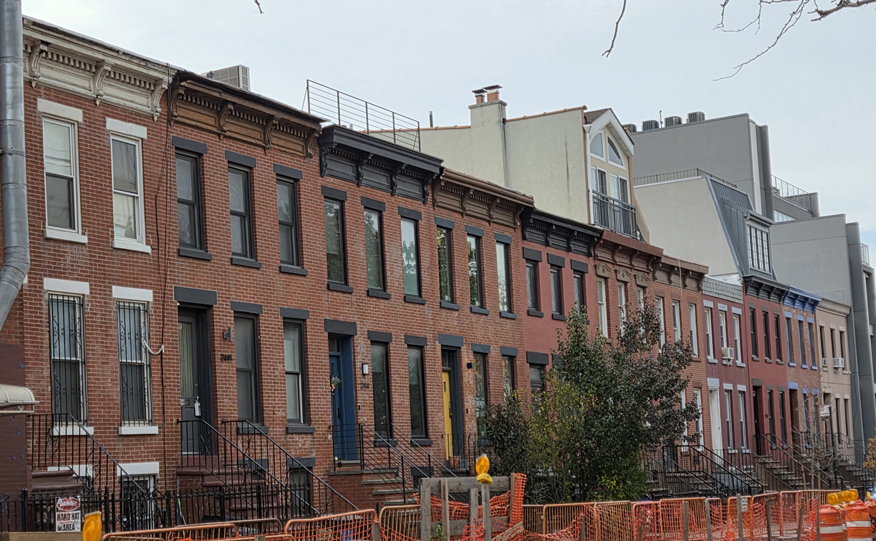
    Most of the houses on our block were built before 1900, though in a plan common for that time. The houses were constructed near the avenues or streets with a small yard in front and individual yards in back that combine to form a large greenspace. The 3-family houses on 4th Avenue have a small, 15-foot yard and the 2-family houses on the side streets have a backyard that extends halfway down the block.

    Photo of 3-story, historic, brick, rowhouses
    The 3-family houses on our block of 4th Avenue with small back yards.
    A row of 2-family houses built before 1901
    2-family houses on 7th Street with large back yards.
    the greenspace created by our back yards
    Some of the greenspace created by the individual back yards of our houses, which provided light and ventilation required by the building code plus absorption of rainwater in the flood zone.

    Next time, the greenspace for the block.

  • Gowanus Health Survey and Town Hall

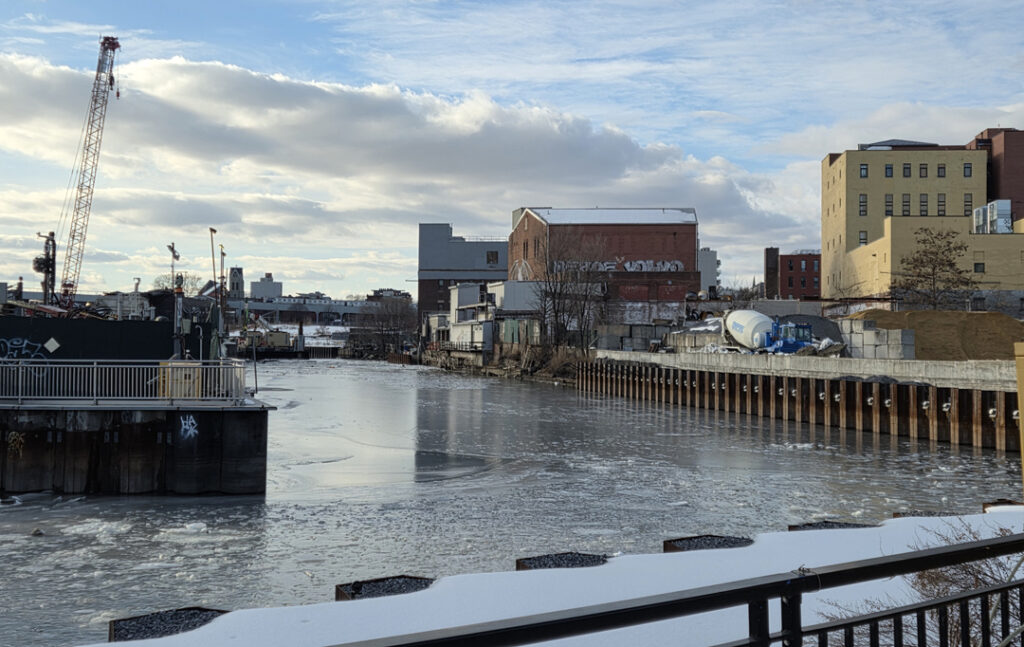
    A view of the Gowanus Canal

    This was certainly not what I planned for my first blog post, but there is news about the investigation of the soil in our Gowanus neighborhood that raises questions about the soil in the proposed development site at 4th Avenue and 7th Street. Voice of Gowanus has launched a health survey for current and former residents of the Gowanus area in partnership with Dr. Judith Zelikoff, a recognized expert in toxicology and environmental health at New York University Grossman School of Medicine.

    The main goal of the health survey is to determine if – and how – the residents of Greater Gowanus have been affected by chemicals known to be in the local soil and air from the toxic substances left over from the years of industrial activity in the Gowanus Canal Federal Superfund site, the surrounding NYS Superfund and NYS Brownfield sites, and the Soil Vapor Intrusion (SVI) investigation conducted by the NYS Dept. of Environmental Conservation (DEC). These chemicals include the human carcinogens trichloroethylene (TCE), benzene, toluene, ethylbenzene (BTEX), and other industrial contaminants that were used for over a century.

    You can fill out the survey here https://nyu.qualtrics.com/jfe/form/SV_cGbI2c9FLX8YuY6

    Along with the survey, Voice of Gowanus will be hosting an online Town Hall with Dr. Zelikoff on March 10 at 7pm Eastern Time. For more information and to register for the Town Hall, please visit https://www.voiceofgowanus.org/updates/online-town-hall-march-10th-7pm-learn-more-about-the-gowanus-community-health-survey.