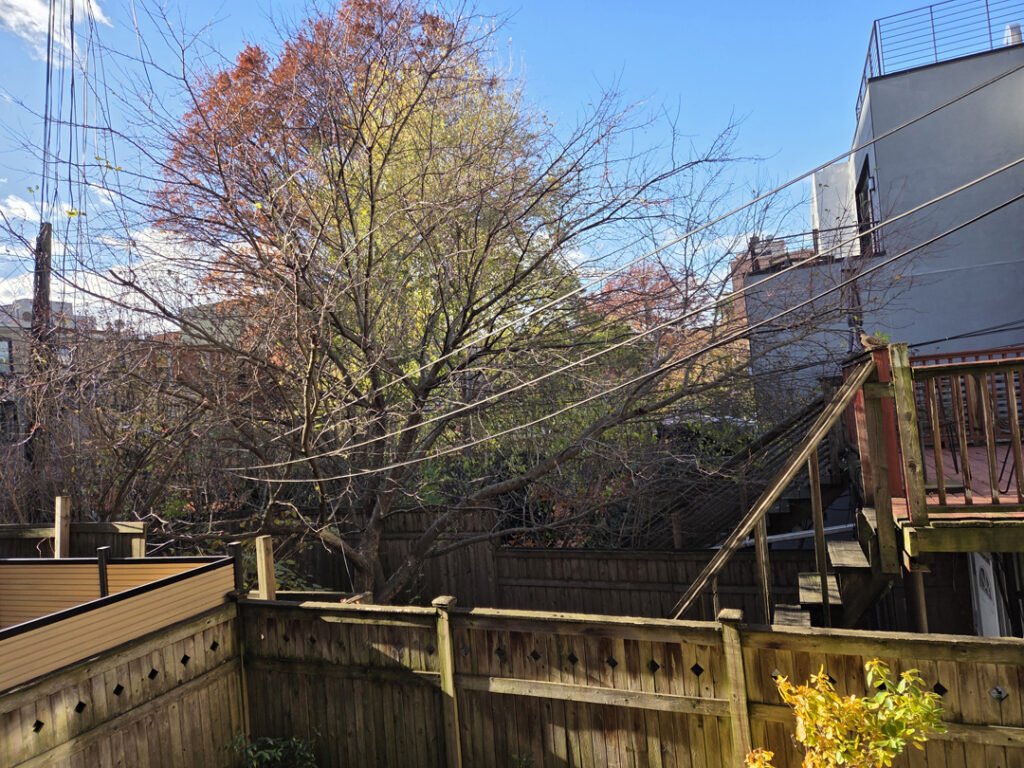
A very optimistic member of our Brooklyn Community Board 6 told homeowners that he expects developers to work with their neighbors. Let’s see how that is working out. Hint: it starts out small and gets dangerous.
“JUST THE NEIGHBOR”
Residents of the block got an early idea of how little the developer’s people planned to work with the neighbors when an employee showed up at one of the vacant properties. When the employee couldn’t get into the building, he entered the yard in the home next door. When the homeowner stopped the man from just walking onto their property, the employee told someone on the phone “oh, it’s just the neighbor.” So, neighbors are just a nuisance that get in the way.
DEADLY TO WILDLIFE
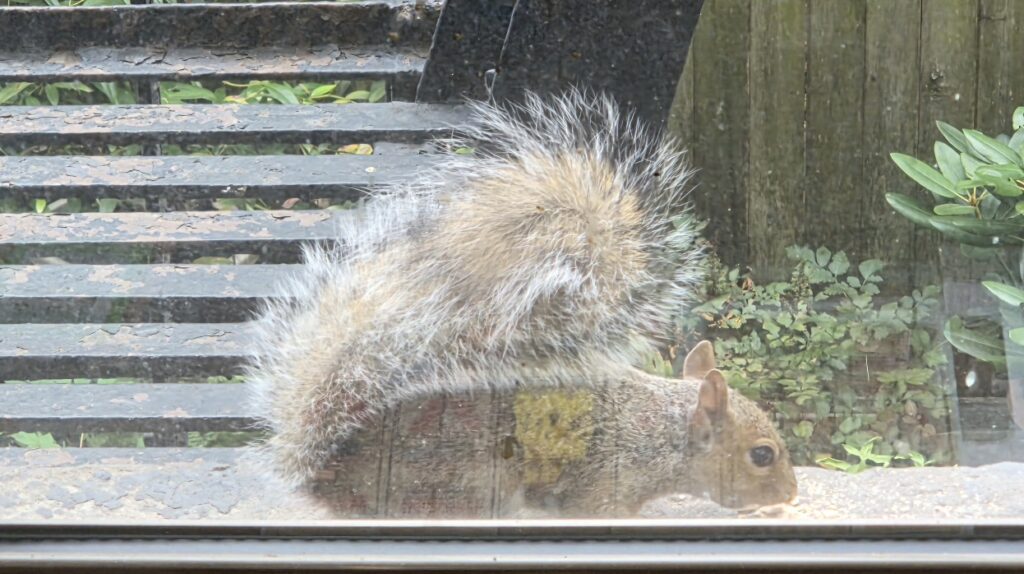
We have always had grey squirrels in the larger backyards on the block and visiting other backyards. The little critters are a protected state species, so it is illegal to kill them in New York City or remove them from your property and dump them somewhere else. Yet, some men showed at 246 7th Street on May 29, 2026 and left the back door open over Memorial Day weekend. They returned on Monday, June 1 to close the door.
After the crew left, people realized that all of the squirrels in the area were gone. The DEC website did not list any permits filed nor a Nuisance Wildlife Control Operator hired for the squirrel removal. Did the workers kill them? Dump them somewhere else? No one knows, but they are gone.
After that was the poor rabid/sick raccoon in the backyard of 246 7th Street. People contacted 311 for help, but officials couldn’t get into the property, so the raccoon died in the vacant house. The stench was noticeable for days. R.I.P., Rocky Raccoon.
TRASH
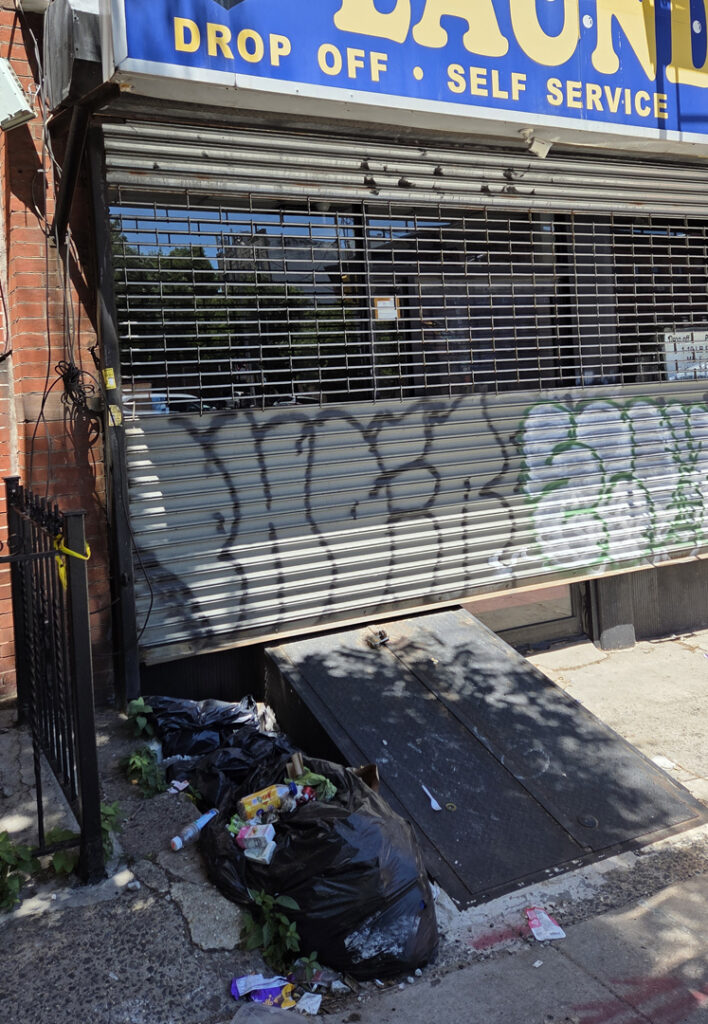
While homeowners on the block must keep sidewalks clean or receive a fine from the NYC Department of Sanitation, Bravon Capital in New Jersey thought they were special and allowed people to just dump trash in front of 416 4th Avenue for weeks.
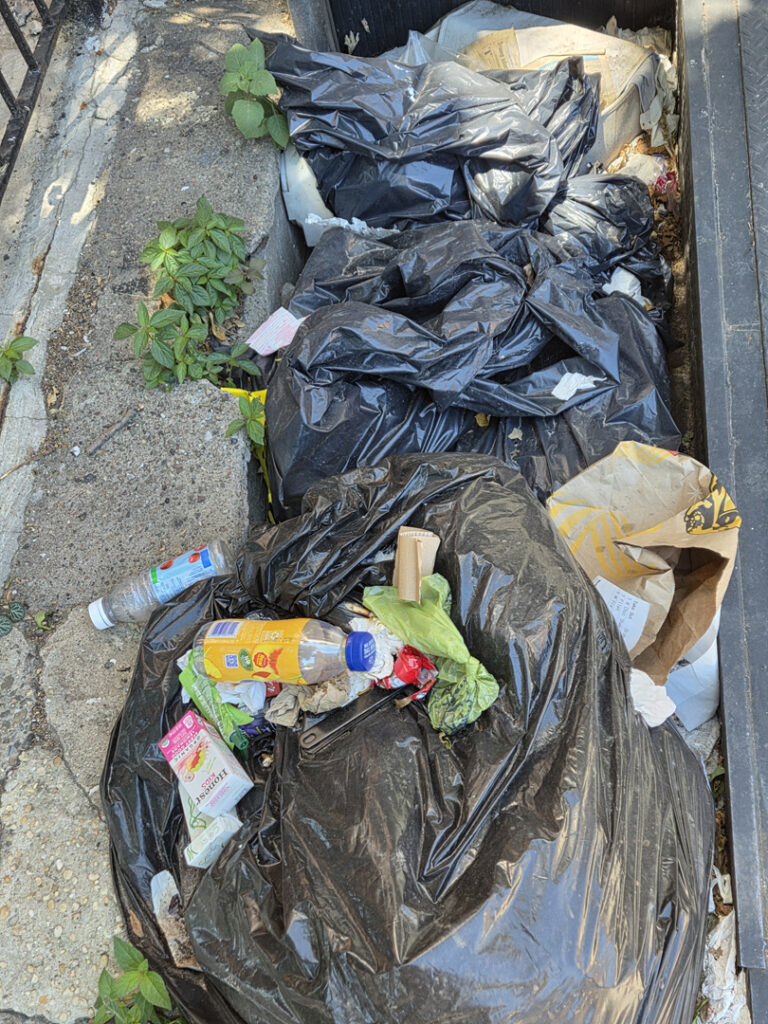
They received a Sanitation violation for failure to clean up on June 17, 2026, but trash remained.
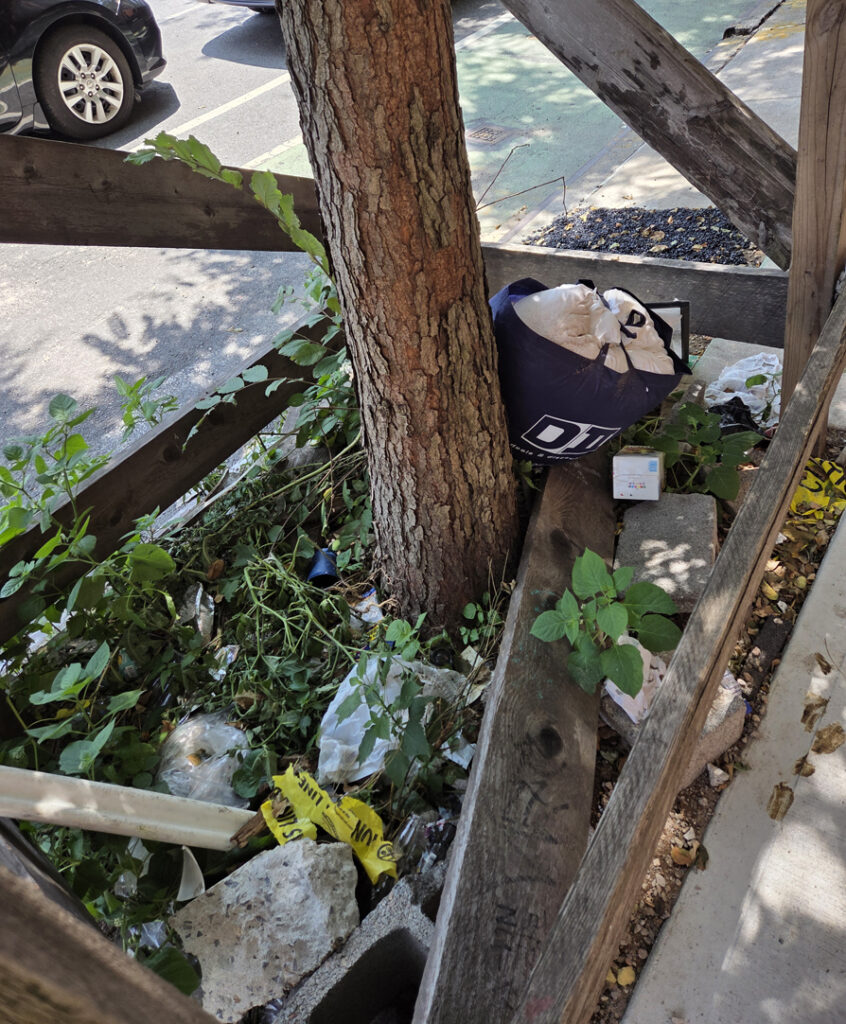
Since Bravon Capital also wasn’t cleaning the tree pit in front of 418 4th Avenue, next door to the trash pile, they got another Sanitation Violation.
CHEAP AND DIRTY ASBESTOS REMOVAL THREATENED THE NEIGHBORHOOD
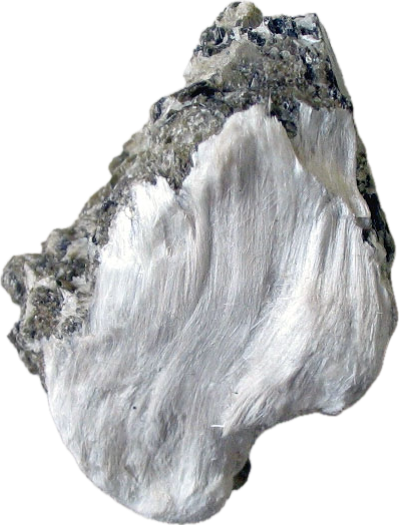
Asbestos is a mineral composed of fibers. Because of its fiber strength and heat resistance, asbestos is a very useful in building construction materials for insulation and fire resistance. You can find asbestos in roofing shingles, floor and ceiling tiles, car parts, and fire-resistant fabrics. For a deep dive, you can click on this link: https://en.wikipedia.org/wiki/Asbestos
Unfortunately, sharp asbestos fibers can lead to breathing difficulties or even cancer if they are inhaled when asbestos-containing materials are damaged or removed. That’s why the Department of Environmental Protection (DEP) has strict rules about removing asbestos safely.
Ignoring those rules, a crew started chopping off asbestos-containing roofing material at 244A 7th Street and 416 4th Avenue and stuffing the pieces in trash bags- no trained monitor, no containment with plastic sheeting, no permit displayed, no foam to keep the asbestos from escaping into the air, not even protective clothing for the crew.
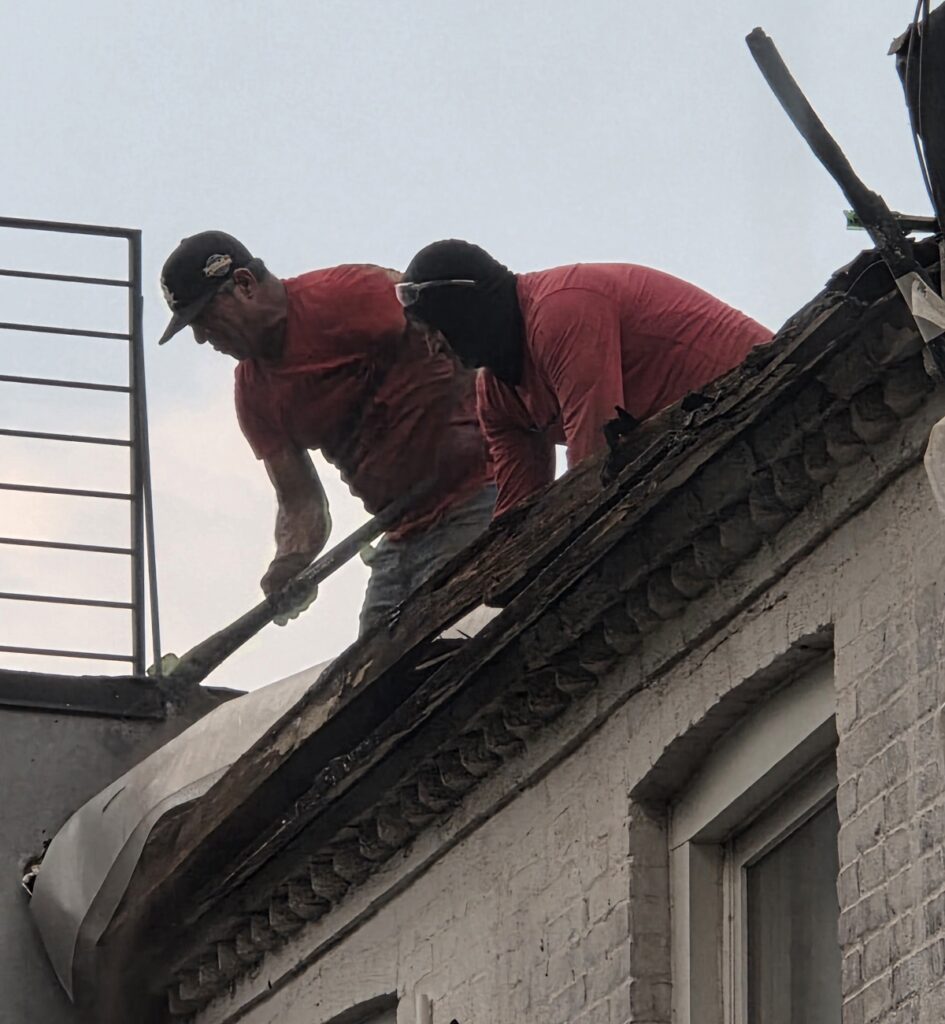
Neighbors filed complaints with the Department of Environmental Protection (DEP), but it seemed like a game to Bravon’s crew: ignore DEP violations, hide from neighbors taking photos, keep the door to 416 4th Avenue padlocked while workers were on the roof, ignore requests from Department of Buildings for inspections, and work on a holiday.
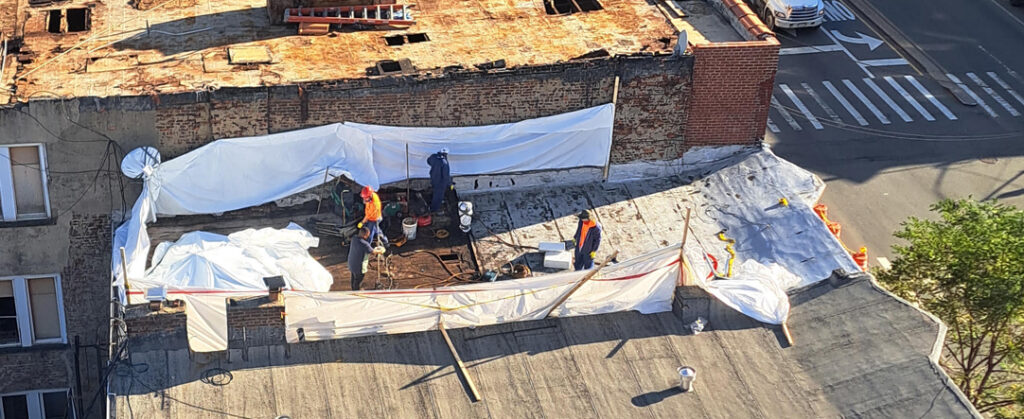
DEP inspectors finally caught them releasing asbestos into the air and the developer had to hire a real asbestos-removal company for the remaining 2 roofs. Here is the new crew putting up containment sheets and preparing to safely remove the rest of the roof at 418 4th Avenue with foam and protective equipment for the workers.
With the roofs gone, the neighborhood now has to deal with unsafe buildings, which is where the Department of Buildings comes in, but that is for the next post.